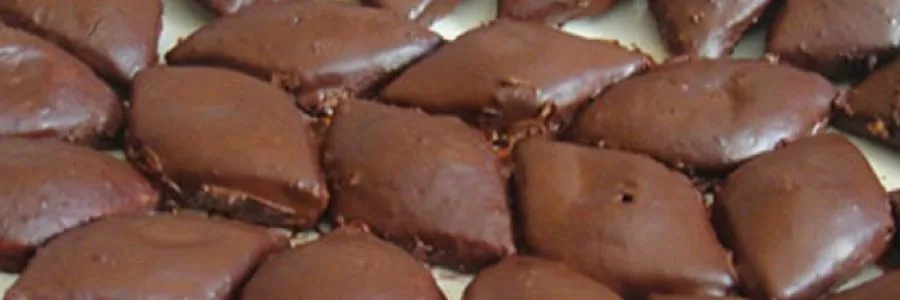
Mostaccioli – the dark chocolate diamond from Naples
Particularly from Naples and Puglia, these are spiced cookies often glazed with chocolate, shaped like diamonds or rectangles. In my mind, mostaccioli are the Italian treats that just say Christmas! They are this interesting mix between cookie and brownie, while being also really spiced up and begging for wine… or during the cold winter, begging for Vin Brulé. Well… maybe they are just my favorite 😉
The Authentic Neapolitan Mostaccioli Recipe Card
Mostaccioli Neapoletane (authentic recipe)

Mostaccioli are traditional Italian biscuits, particularly popular during Christmas, known for their diamond shape, chewy texture, and rich flavors from spices like cinnamon and cocoa. They are typically glazed with dark chocolate, offering a sweet contrast to the spiced, dense biscuit beneath.
Ingredients
- 250 grams of 00 flour
- 75 grams of almond flour
- 75 grams of honey
- 75 grams of sugar
- 20 grams of unsweetened cocoa powder
- 1/2 orange (or half the juice and zest of one orange)
- 5 grams of ammonia for cakes
- 1 teaspoon of cinnamon or Neapolitan "pisto" (a mix of cinnamon, pepper, nutmeg, star anise, clove, and coriander)
- Around 50 ml of warm water
- 100 grams dark chocolate (for the glaze)
Instructions
- Prepare the Dough: In a large bowl, mix together the 00 flour and almond flour. Add the sugar, cocoa powder, and cinnamon or "pisto" to the flour mixture.
- Incorporate Wet Ingredients: Make a well in the center of the dry ingredients. Pour in the honey. Grate the zest of half an orange into the mixture and squeeze in the juice.
- Mix and Knead: Dissolve the ammonia for cakes in the warm water (if using baking powder, you can mix it directly into the dry ingredients). Pour this into the well with the other wet ingredients. Mix everything together until you start to form a dough. If the dough is too dry, add a little more water; if too wet, add a bit more 00 flour.
- Knead the Dough: Turn out the dough onto a floured surface and knead until smooth, about 5-10 minutes. The dough should be firm but pliable.
- Shape the Mostaccioli: Roll out the dough to about 1/2 cm thickness. Use a knife or cookie cutter to cut into diamond shapes or traditional Mostaccioli shapes.
- Bake: Preheat your oven to 180°C (350°F). Place the cut shapes on a baking sheet lined with parchment paper. Bake for about 15-20 minutes, or until they are firm to the touch but not browned.
- Cool: Allow the biscuits to cool completely on a wire rack.
- Prepare the Chocolate Glaze: Melt the dark chocolate in a heatproof bowl over a saucepan of simmering water (double boiler method), or in short bursts in the microwave, stirring frequently until smooth.
- Glaze the Mostaccioli:
Once the biscuits are cool, dip the top of each Mostaccioli into the melted chocolate or use a spoon to spread the chocolate over the top. You can also drizzle the chocolate for a different effect. Let the chocolate set before serving or storing.
The ingredients make the difference!
- To get the characteristic tender yet chewy texture use Italian 00 flour. If you can’t find 00 flour, a very fine all-purpose flour is the next best choice. The texture will be then a bit less chewy, but close enough.
- In the traditional Mostaccioli recipes Italian cooks use “ammonia for cakes” or baker’s ammonia (ammonium bicarbonate) for leavening. However, baking powder can be used as a substitute if necessary, although the texture might slightly differ. If you use baking powder, you will need to use double the quantity of ammonia. If you want to replace it with baking soda, then you will need to read this article to understand how they are substituted in a way that will leave it without leaving a residual taste to the cookie.
- Use the authentic Neapolitan “pisto” if possible, which includes a mix of spices like cinnamon, pepper, nutmeg, star anise, clove, and coriander. If you are in Italy, you will find it already prepared in the shops, but no worries, below I will leave the blend recipe with spices proportions so that you do it yourself.
- Off course, flavorful honey and freshly ground almonds will enhance the taste! Also, add to the mix the fresh citrus note of orange zest and juice to balances the rich chocolate and spices, and you will get yourself a taste of winter in a bite.
Neapolitan Pisto (Spice Mix) Recipe
Neapolitan Pisto (Spice Mix)

Here's a recipe for the Neapolitan spice mix called "Pisto," used in traditional Italian baking, particularly for Mostaccioli. This blend will bring the authentic taste of Naples into your baking, especially during the festive season.
Ingredients
- 15 grams of cinnamon
- 5 grams of pepper (black or white, or a mix)
- 5 grams of nutmeg
- 2 grams of cloves
- 2 grams of star anise
- 2 grams of coriander seeds
Instructions
- If using whole spices, start by grinding them individually to a fine powder. A mortar and pestle work well for this, or you can use a spice grinder or coffee grinder dedicated to spices.
- Mix all the ground spices together. If using pre-ground spices, simply measure out the quantities and combine them in a bowl.
- For an extra layer of flavor, you can briefly toast the spices before grinding or after combining. This is optional! If toasting, do this in a dry skillet over low heat, stirring constantly until aromatic, then immediately transfer to a bowl to cool. Be careful not to burn the spices.
- Once mixed, store the pisto in an airtight container away from direct sunlight. It can last for several months if kept in a cool, dry place.
Notes
- The quantities can be adjusted to taste. Some recipes might include more or less of one spice, so feel free to tweak the blend to suit your preference.
- If you can’t find star anise or coriander seeds, you can omit them, but they add a unique depth to the mix.
- Pisto is not only for Mostaccioli but can be used in various Neapolitan baked goods like "Roccoco" cookies, "Sussumella," or other traditional Christmas treats.
- This spice mix is quite aromatic, and a little goes a long way in recipes, so use it sparingly until you know how strong you prefer the flavor.
Tips on the baking technique
- The dough should be firm but pliable, not too sticky, not too crumbly. Adjust the flour or water to get it that way.
- Watch the oven closely as Mostaccioli can go from perfect to overdone quickly. They should be firm but not hard when done, with a slight give when pressed.
- Melt the chocolate gently to avoid burning it. Dark chocolate with a high cocoa content (70% or above) will give you that authentic, slightly bitter contrast to the sweet biscuit.
- Let the biscuits cool completely before glazing to ensure the chocolate sets properly on top.
- Store Mostaccioli in an airtight container. They can last for several weeks, becoming even chewier and more flavorful with time.


How can I make Mostaccioli in advance in preparation for the winter festivities season?
If you’re looking to get ahead of the seasonal rush, making treats like Mostaccioli cookies in advance is a wise strategy. Of course, these traditional Italian biscuits can be prepared ahead of time and frozen for later enjoyment.
Before you freeze them, it’s wise to leave the cookies un-glazed. Freezing them without chocolate prevents the glaze from becoming grainy or discolored when you thaw them. Make sure to let the cookies cool completely to avoid condensation that could make them soggy. For storage, use an airtight container or freezer bag, ensuring you’ve removed as much air as possible to ward off freezer burn.
When it comes to freezing, if you’re stacking the cookies in a container, layer them with parchment or wax paper to prevent sticking. Don’t forget to label your container or bag with the freezing dat. Mostaccioli cookies maintain their best quality for up to three months in the freezer, though they can be stored longer. Simply place them in the freezer where their dense, chewy texture will hold up well.
To enjoy your cookies later, thaw them either at room temperature or in the refrigerator to preserve their texture. If you’ve kept them un-glazed, you can apply the chocolate glaze once they’ve come to room temperature, which helps avoid any condensation issues. If you do freeze them already glazed, be prepared for the chocolate to not look as vibrant as when freshly applied; you might want to add a fresh layer of chocolate after thawing to bring back their festive appearance.
What are some other desserts that incorporate the Neapolitan pisto spice mix?
The Neapolitan pisto spice mix, with its distinctive blend of cinnamon, nutmeg, cloves, star anise, coriander, and sometimes pepper, is not only used in Mostaccioli but also features in several other traditional Italian desserts, especially around the holiday season:
- Roccocò: These are hard, ring-shaped cookies from Naples, known for their spicy, aromatic flavor, perfect for dunking in sweet wine or coffee. Pisto gives them their unique taste, making them a staple during Christmas.
- Susamielli or Sussumella: These are S-shaped cookies, often made with honey, almonds, and pisto, providing a sweet, spiced flavor. They’re another Christmas treat in the Campania region, including Naples.
- Struffoli: Although primarily flavored with honey and orange zest, some variations of struffoli, which are fried dough balls formed into a mound and drizzled with honey, might include a hint of pisto for added warmth.
- Mostaccioli di Sorrento: Similar to traditional Mostaccioli, these cookies also use pisto for their spiced profile but a lot more!
- Gingerbread-like Treats: While not traditionally Italian, some bakers incorporate pisto into gingerbread cookies or cakes, giving them an Italian twist with its unique spice blend.
- Christmas Cakes and Pies: Pisto can be used in the batter or filling of various Christmas cakes or as part of a spice mix for pie fillings, adding depth and a festive flavor to these desserts.