Cantucci – the Wine Dessert of Italy
Cantucci, also known as biscotti di Prato, are traditional Italian almond biscuits from Tuscany. They are twice-baked, giving them a crunchy texture, and are often enjoyed dipped in Vin Santo, a sweet dessert wine.

The Authentic Cantucci Recipe Card
Cantucci
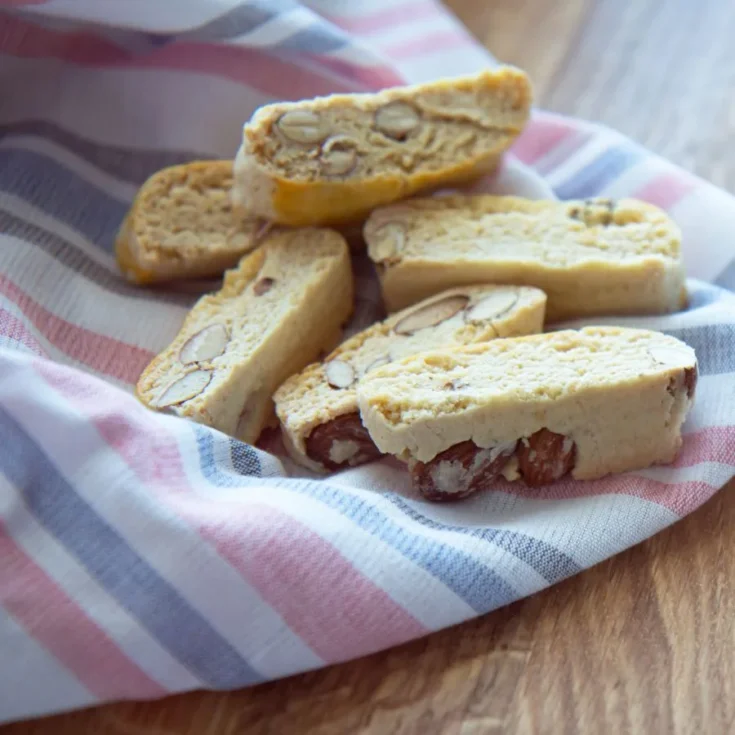
Known also asBiscotti di Prato, these are almond biscotti from Tuscany, often served with Vin Santo, a sweet dessert wine, for dipping.
Ingredients
- 250 grams (2 cups) all-purpose flour
- 150 grams (3/4 cup) granulated sugar
- 100 grams (3/4 cup) whole almonds, with skin
- 2 large eggs
- 1 teaspoon baking powder
- 1 teaspoon vanilla extract or 1/2 teaspoon vanilla essence
- Zest of 1 lemon
- A pinch of salt
Instructions
- Preheat your oven to 180°C (350°F). Line a baking sheet with parchment paper.
- Mix Dry Ingredients: In a large bowl, combine the flour, sugar, baking powder, and salt. Stir in the almonds.
- Add Wet Ingredients: In another bowl, beat the eggs with the vanilla extract and lemon zest. Pour this mixture into the dry ingredients and mix until you form a dough. If it's too sticky, add a little more flour, but the dough should be quite stiff.
- Shape the Dough: Divide the dough into two equal parts. On a lightly floured surface, shape each half into a log about 30 cm (12 inches) long and 5 cm (2 inches) wide. Place these logs on the prepared baking sheet, leaving some space between them as they will spread slightly.
- First Bake: Bake for about 25-30 minutes until they are golden and firm to the touch.
- Cool and Slice: Remove from the oven and let them cool for about 10 minutes. Reduce the oven temperature to 160°C (320°F). Once cool enough to handle but still warm, use a serrated knife to cut the logs diagonally into slices about 1 cm (1/2 inch) thick.
- Second Bake: Place the slices back on the baking sheet, cut side down, and bake for another 10-15 minutes, or until they are dry and crisp. Flip them over halfway through baking if you want them evenly toasted on both sides.
- Cool: Allow the biscotti to cool completely on a wire rack; they will harden as they cool.
Notes
- Serving: Cantucci are traditionally served with Vin Santo for dipping, but they also pair wonderfully with coffee, tea, or even dessert wines like Passito or Moscato d'Asti.
- Storage: Store in an airtight container; they'll keep for weeks if you can resist eating them all!
- Every Italian nonna might have her own secret, so feel free to adjust sugar or lemon zest according to your taste. Some variations might include adding anise seeds, pine nuts, or even chocolate chips, but for authenticity, almonds are key.
- Remember, the charm of Cantucci also lies in its rustic imperfection, so don't stress too much over exact measurements or shapes; the taste and texture are what truly matter.
Tips for making the perfect cantucci
- The taste of the almonds is central to Cantucci, so good quality will make a difference. Keep the almonds whole for that authentic crunch, but you might toast them lightly first if you prefer a nuttier flavor. However, traditional recipes use raw almonds.
- The dough should be stiff and not too sticky. If it’s too wet, add a little more flour, but remember, the dough should be firm enough to hold its shape when formed into logs.
- Shape your dough logs evenly. Uniform thickness ensures even baking. Also, don’t overbake in the first bake; the logs should be firm but not hard. They’ll continue to dry out in the second bake. For the second bake, watch closely as they can go from perfectly crisp to burnt quickly.
- Use a serrated knife for clean slices, and cut at a diagonal for the classic biscotti shape. But don’t forget to let the logs cool slightly before slicing. If they’re too hot, they’ll crumble; if too cold, they might be hard to cut without breaking. Aim for warm but manageable.
- Allow Cantucci to cool completely on a wire rack. They’ll crisp up as they cool, becoming the perfect texture for dipping.
- Cantucci can last for weeks if stored properly, in an airtight container.
- Pair with Vin Santo, coffee, or any dessert wine for the authentic experience. The contrast between the crisp cookie and the sweet, sometimes fortified, wine is delightful.


How can I make Cantucci in advance in preparation for the winter festivities season?
Especially during the busy holiday season a mother is busy with everything. This is why it is costumery here to make the cantucci ahead of time. They have a long shelf life due to their twice-baked nature, making them ideal for making in advance. This is how you can do it: freeze them after the first bake, cooled, and then cut. You would then bake them again when you’re ready to eat them, ensuring they keep their crisp texture.
What is the difference between Cantucci and biscotti?
Outside of Italy, “biscotti” is often used as a catch-all term for Italian cookies. However, Cantucci specifically refers to the twice baked, almond biscotti from Prato, Tuscany. The main difference lies in the baking technic and the ingredients; traditional Cantucci are baked 2 times, and include almonds, while “biscotti” can be made with a variety of nuts, flavors, or chocolate.
When are cantucci most often baked?
Cantucci are most often baked for the Holidays and Festivities. They are a staple in many Italian homes during the Christmas season. They’re often prepared as part of the traditional Christmas sweets, enjoyed with family and friends. In Tuscany, particularly around Prato where Cantucci originated, they are often baked for local festivals or events celebrating regional cuisine. Also, they are frequently baked as gifts, especially during holidays, to give to friends, neighbors, or as hostess gifts. The long shelf life of Cantucci makes them perfect for this purpose.
The tradition of festivals in Italy
Regional festivals in Italy are vibrant celebrations of local culture, food, wine, and traditions. They often revolve around the harvest of particular foods, local saints’ days, or historical commemorations. Therefore, Cantucci, being a dessert, would typically appear at the end of a festival meal or as part of a dessert spread. Many of these festivals are held in the summer and fall months when outdoor celebrations are more feasible and when many products are in season. They are not just about food; they include music, dance, and religious processions, making them a whole cultural experience.
Here’s a breakdown of some notable regional festivals (you will find Cantucci featured in most of them):
- Tuscany Festivals:
- Festival of Cantucci and Vin Santo: the pairing of Cantucci with Vin Santo is celebrated in various forms across Tuscany, especially in Florence and Prato. Food fairs and events often highlight this traditional sweet treat.
- Sagra delle Pallette ai Funghi in Uliveto Terme, a local festival where locals will serve traditional Tuscan “pallette” or polenta with mushroom sauce, complemented by grilled specialties and live music.
- Sardinia: Sagra della Cipolla in Banari, a festival celebrating onions.
- Marche: BrodettoFest in Fano, focusing on fish soup.
- Puglia: festivals like the Bari Focaccia Festival or the Red Onion Festival in Acquaviva delle Fonti.
- Umbria: more known for its Jazz Festival, local food festivals are plentiful, and Cantucci might find their place among other Italian desserts.